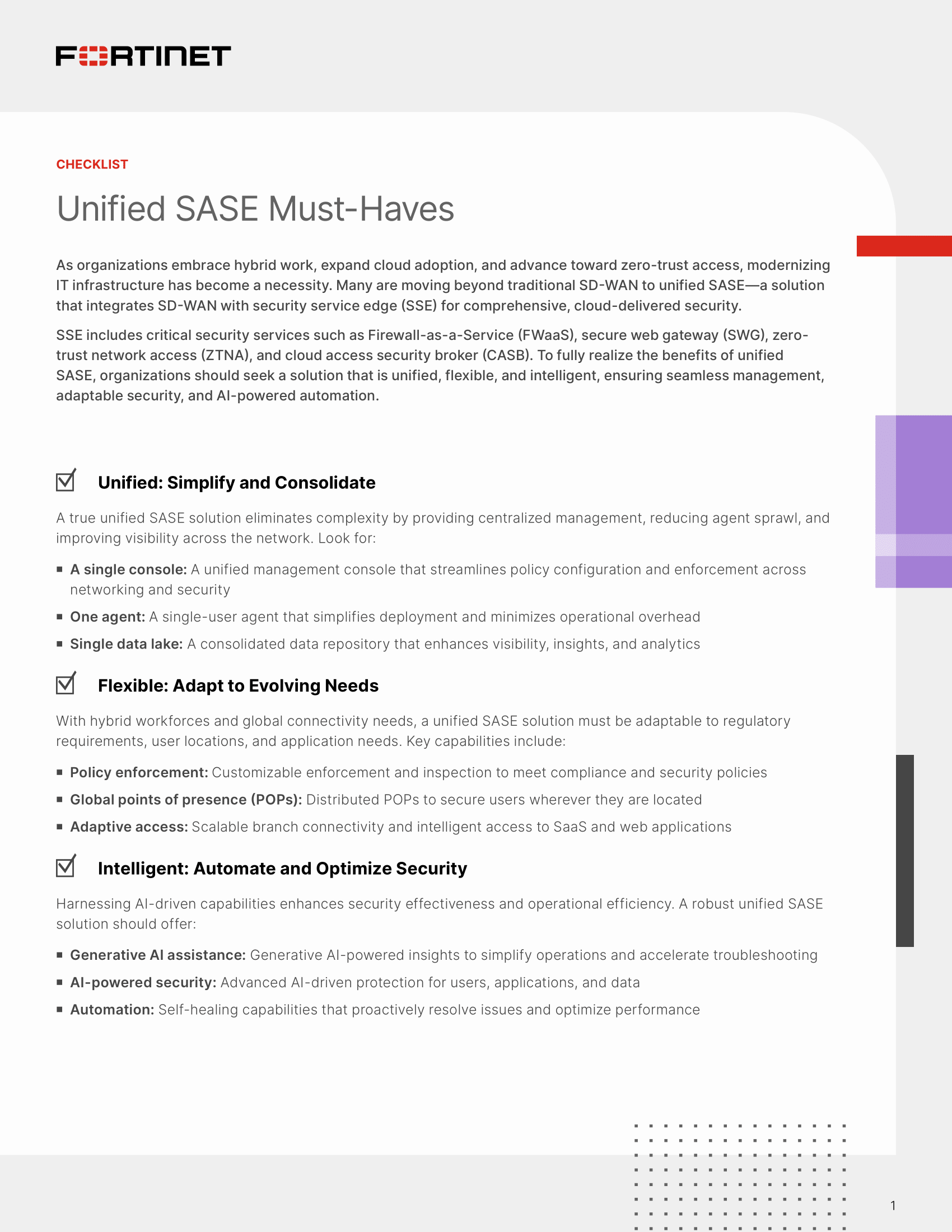
Pi?? niezb?dnych elementów rozwi?zania SASE
| Over the past few years, organizations have been expanding their network strategies to include multi-edge presence to support hybrid work, including work-from-anywhere (WFA) and the use of cloud-based applications and environments. As this process continues and businesses adapt to these new working conditions, the attack surface also expands.
To address these challenges, SASE (Secure Access Service Edge) solutions have been developed, enabling organizations to rapidly converge and scale their existing security and networking strategies. The ability to execute this new, distributed, and performance-intensive strategy is now fundamental to success in today’s digital marketplace. Choosing the right SASE provider can mean the difference between operational success and struggling to ensure all the essential elements of this strategy work together. While SASE theoretically provides WFA users with secure access to the cloud, not all SASE solutions are created equal in terms of scalability, security, and orchestration. The best solutions shouldn’t increase overhead (implementation and maintenance) or increase the IT staff responsible for such implementation and subsequent integration with existing systems. |